Golf carts have become essential for many recreational activities. However, issues like acid leaks from batteries can be alarming. Understanding the causes is crucial. Renowned expert Dr. Mark Lewis, a battery technology specialist, states, “Identifying battery problems early can prevent significant damage.”
So, why is my golf cart battery leaking acid? It may stem from overcharging or excessive heat. You might notice corrosion around terminals or a strange smell. Both signs indicate battery distress.
Addressing this issue requires immediate attention and knowledge. Regular maintenance is vital to prolong the lifespan of your golf cart's battery. Checking levels and ensuring proper charging techniques helps. However, it's common for owners to overlook these aspects, leading to more prominent problems. Taking proactive measures can save time and money in the long run.
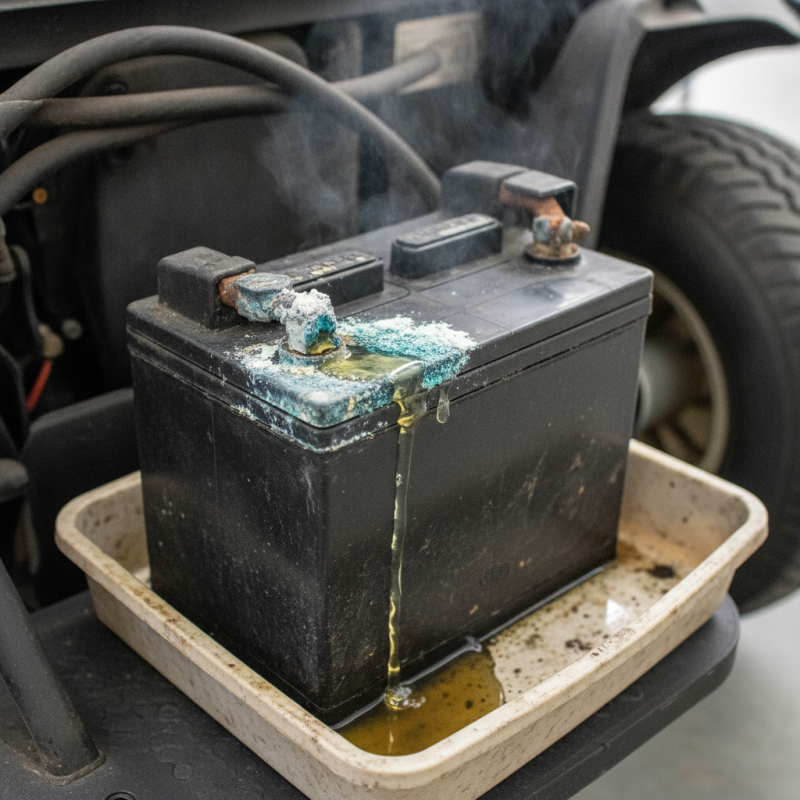
Golf cart battery acid leakage is a serious issue that many owners face. Acid leaks can lead to corrosion and damage, affecting battery life and performance. Studies show that nearly 30% of golf cart batteries experience some form of leakage. This not only poses a safety risk but also leads to increased maintenance costs.
To understand acid leakage, one must consider the construction of the batteries. Lead-acid batteries are prone to leaks when the seals degrade. Temperature fluctuations, overcharging, and improper maintenance can exacerbate these issues. A report by the Battery Council International noted that nearly 15% of battery failures stem from acid leakage. Prevention is crucial. Regular inspections can identify early signs of wear or deterioration.
In some cases, owners may ignore the warning signs. A small puddle of acid can seem minor, but it can lead to greater issues over time. Absorbent mats and neutralizing agents can help manage spills. However, they are not a permanent solution. Users should consider proper battery housing and ventilation to reduce the risk of leaks. Understanding these factors is essential to maintaining not only the battery but the entire golf cart system.
| Cause of Leakage | Symptoms | Solution | Prevention Tips |
|---|---|---|---|
| Overcharging | Battery case swelling, acid leak | Check voltage, adjust charger settings | Use a smart charger, monitor charging times |
| Damaged Battery | Visible cracks, corrosion | Replace the battery | Regular inspection of battery condition |
| Extreme Temperatures | Battery overheating, fluid boiling | Move to a cooler location, ventilate | Store batteries in climate-controlled areas |
| Old Age | Reduced performance, acid presence | Replace with a new battery | Maintain proper charging and care |
| Loose Connections | Corrosion buildup, acid drips | Tighten connections, clean terminals | Check connections regularly for security |
: Common causes include overcharging, physical damage, and extreme temperatures.
Overcharging generates gas and can lead to electrolyte overflow, causing leakage.
Look for rust around terminals, swollen casings, and strange odors.
Inspections can identify wear and tear, preventing future leaks and costly repairs.
High temperatures can accelerate chemical reactions, decreasing lifespan by about 20% annually.
Neutralize leaks with a baking soda solution and address them immediately.
Neglecting maintenance can cause performance discrepancies and increased risk of leakage.
Regularly check connections, perform visual inspections, and keep the area clean.
Always wear protective gear when handling batteries to avoid harm.
Small leaks can escalate into more significant issues and damage the battery further.
The article "Why is My Golf Cart Battery Leaking Acid Best Solutions?" addresses the critical issue of battery acid leakage in golf carts. It begins by explaining the common causes of acid leakage, including overcharging, faulty connections, and extreme temperatures. Identifying the signs of battery acid leakage, such as corrosion on terminals, unusual odors, and diminished performance, is essential for timely intervention.
To address the problem, the article provides effective solutions to fix leaking golf cart batteries, emphasizing the importance of proper maintenance and replacement of damaged components. Additionally, it highlights preventive measures to avoid future battery acid leakage, such as ensuring regular inspections and using appropriate charging practices. By understanding "why is my golf cart battery leaking acid," owners can take proactive steps to maintain their carts and extend battery life.

 Tulip Cart